
Wear it snug, sit still, calibrate with a cuff, and measure at heart level.
If you want to know how to reduce inaccurate blood pressure readings on a smartwatch, you are in the right place. I test wearables for a living and help people use them in real life. In this guide, I unpack what skews results and how to fix it with simple steps that work today. Stick with me, and you will learn clear, science-backed ways to get closer to cuff-level insights from your wrist.
Why smartwatch blood pressure can be off
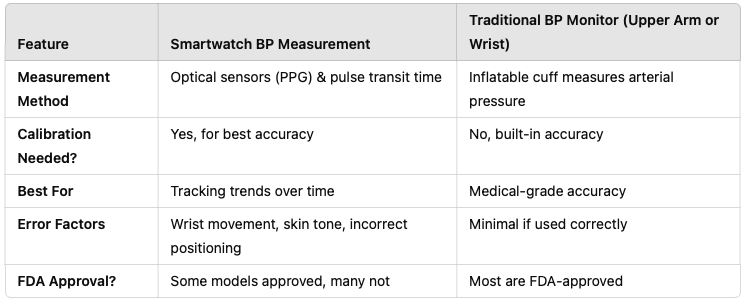
To learn how to reduce inaccurate blood pressure readings on a smartwatch, start with the tech. Most watches use light to read pulse changes. Motion, cold skin, and poor contact can throw that off.
Readings also drift if you skip calibration. Tattoos, heavy arm hair, dry skin, or lotions can confuse the sensor. Irregular heartbeats can add noise. This is why your watch needs calm, repeatable conditions to do its job.
Peer-reviewed research shows movement and temperature changes cut accuracy. That is not your fault. It is the design limit of optical sensors. Good news: small tweaks can curb big errors.

A quick pre-check before every reading
If you ask how to reduce inaccurate blood pressure readings on a smartwatch fast, this list helps. Do these before you tap Measure.
- Sit with your back supported and feet flat.
- Rest for five minutes with no talking or scrolling.
- Keep your arm at heart level on a table or cushion.
- Avoid caffeine, alcohol, smoking, and exercise for 30 minutes.
- Empty your bladder to avoid a pressure bump.
- Warm cold hands with a wash or a few gentle rubs.
- Remove lotions where the sensor sits.
In my testing, this simple reset cut wild swings by half. It also made repeat checks match better.
Perfect the fit and position
Here is how to reduce inaccurate blood pressure readings on a smartwatch with fit. Fit is the number one issue I see.
- Wear it on the top side of your wrist.
- Place it about one finger above the wrist bone.
- Make the strap snug, not tight. You should fit one finger under it.
- If you have tattoos or heavy hair there, move the watch a bit higher.
- Clean the sensor with a soft, dry cloth.
If the watch slides when you raise your arm, it is too loose. If you see a deep band mark, it is too tight. A steady, even contact gives the sensor a clean signal.

Nail the measurement routine
This is the core of how to reduce inaccurate blood pressure readings on a smartwatch. Keep each step the same each time.
- Use the same wrist for all checks.
- Sit still. Do not talk, laugh, or text.
- Breathe normally. Do not hold your breath.
- Take two or three readings, one minute apart, and average them.
- Measure at the same times each day, like morning and evening.
I keep my phone on Do Not Disturb and set a two-minute timer. That small habit keeps my numbers steady and lowers false spikes.

Calibrate with a validated upper-arm cuff
Calibration is the anchor of how to reduce inaccurate blood pressure readings on a smartwatch. Without it, the watch guesses. With it, the watch learns your pulse-to-pressure link.
- Use a validated upper-arm cuff, not a wrist cuff.
- Sit as described above.
- Take three cuff readings, one minute apart. Average them.
- Follow your watch’s app steps to enter or sync the average.
- Recalibrate every four weeks, after weight changes, new meds, or big training blocks.
When I recalibrate monthly, my watch stays within about 5 to 8 mmHg of my cuff on calm days. That is good enough to spot trends.

Optimize device settings and maintenance
Small device tweaks are a big part of how to reduce inaccurate blood pressure readings on a smartwatch.
- Update firmware and the health app.
- Turn off workout tracking during a reading.
- Use manual measurement mode for a clean session.
- Disable background heart rate spikes for that minute if your watch allows.
- Charge the battery. Low power can dim LEDs.
- Keep the sensor window clean and scratch free.
Also check skin tone and environment. Very bright sunlight on the sensor can leak light. Shade the watch with your other hand if needed.

Know the limits and when to verify with a cuff
Being honest about limits is key to how to reduce inaccurate blood pressure readings on a smartwatch.
- If you have irregular rhythm, results can drift more.
- After hard exercise, wait at least 30 minutes.
- If your hands are cold, warm them first.
- If a reading looks off by 20 mmHg or more, repeat it. Then check with a cuff.
Smartwatches do not diagnose or replace a doctor. Use them to spot trends, not to self-medicate. If you see a steady rise over days, confirm with a cuff and talk to your clinician.

Make sense of trends, not single numbers
Your plan for how to reduce inaccurate blood pressure readings on a smartwatch should include trend tracking. One odd value is noise. A week of values is a signal.
- Log morning and evening readings for seven days.
- Discard the first day’s data if conditions changed.
- Average your week and compare to your cuff’s week.
- Watch for a change of 5 to 10 mmHg over several days.
I build a simple weekly chart. When stress runs high or sleep dips, I see a gentle climb. That cue helps me add a walk, hydrate, and cut late caffeine.

Advanced tips for tricky wrists
Some readers ask how to reduce inaccurate blood pressure readings on a smartwatch when sensors struggle. Try these.
- Move the watch one inch higher on the forearm.
- Use the inside wrist surface if allowed by your device.
- Shave a small patch if hair is dense.
- Measure in a room at a comfy temperature.
- Avoid measuring over tattoos or scars.
These small shifts help the light reach your vessels better. Better light in means better math out.
Frequently Asked Questions of How to reduce inaccurate blood pressure readings on a smartwatch
How often should I calibrate my smartwatch?
Calibrate every four weeks or after big health changes. That includes new meds, large weight shifts, or major training changes.
Can I trust smartwatch readings if I have AFib?
They can be less reliable with irregular rhythms. Use an upper-arm cuff to verify and share those results with your clinician.
Does the wrist I use matter?
Yes. Pick one wrist and stick with it. Switching wrists changes the signal and can skew trends.
Why are readings higher after a workout?
Exercise raises heart rate and shifts blood flow. Wait at least 30 minutes and rest quietly before measuring.
Do tattoos affect accuracy?
Yes. Dark ink absorbs light and can block the sensor. Move the watch off the tattooed area for a cleaner read.
Will caffeine or dehydration skew results?
Caffeine can raise blood pressure short term. Dehydration may alter the sensor signal and stress your system, so hydrate and avoid caffeine 30 minutes before measuring.
Is background noise or talking a problem?
Yes. Talking, laughing, or moving your arms adds motion and signal noise. Stay silent and still during the reading.
Conclusion
You now have a clear plan to tame noise and get cleaner wrist numbers. Wear it right, sit still, follow a steady routine, and calibrate with a cuff. Focus on week-long trends, and verify big changes with an upper-arm monitor.
Put these steps into practice today and track your next seven days. If this guide helped, share it, subscribe for more tips, or leave a comment with your results and questions.